
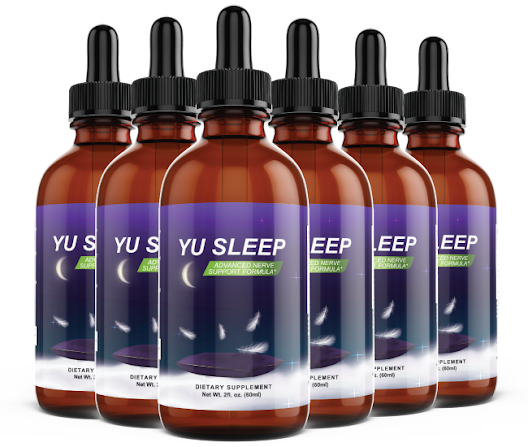
Short summary: YU Sleep is a liquid sleep supplement that promises deeper, more restful nights. This guide explains what it contains, what the evidence does and does not show, who should check with a doctor first, and how to judge a 60-day trial using your own sleep records rather than marketing claims.
Why good sleep is hard to buy
Most adults know roughly how a good night should feel. You fall asleep without a long struggle, you stay asleep, and you wake up without that heavy, foggy start. Getting there is harder. Work stress, late screens, caffeine in the afternoon, an unpredictable schedule, and simple aging all chip away at sleep, often gradually enough that people stop noticing how poorly they are sleeping until a year has passed.
That gap is why sleep supplements sell so well. A bottle on the bedside table feels like a small, concrete step. The category ranges from melatonin tablets and magnesium to herbal teas and blended liquids. YU Sleep is one of the newer products in this crowded space, and it is pitched heavily online. Before you spend money on any of them, it helps to separate what a product claims, what its ingredients have been shown to do, and what you can measure for yourself.
This article takes that approach. It is not a sales page and it does not promise a result. It is meant to help you decide whether a 60-day trial is worth your time and money, and how to run that trial so the answer is clear by the end.
What YU Sleep is
YU Sleep is marketed as a liquid dietary supplement for adults who have trouble falling asleep, staying asleep, or waking up rested. Its sellers describe it as a nano-enhanced formula, meaning the ingredients are said to be broken into very small particles that absorb faster than capsules or tablets. Listings say it is non-habit forming, non-GMO, and made from plant-based and naturally sourced ingredients.
The product is sold through its official website. Across the many third-party reviews and affiliate pages that discuss it, the same basic promises appear: falling asleep faster, fewer middle-of-the-night wake-ups, deeper rest, and no morning grogginess. Those are common goals for any sleep aid, so the more useful question is how the formula is meant to achieve them.
One caution applies from the start. Much of what has been written about YU Sleep comes from affiliate sites and promotional content that repeat each other. Some of that writing contains statements that cannot be checked, such as claims about a study of hundreds of users or about “resetting” sleep architecture. Treat any claim you cannot trace to a published study or to the product’s own label with healthy scepticism.
The ingredients: what reviews report and what to check
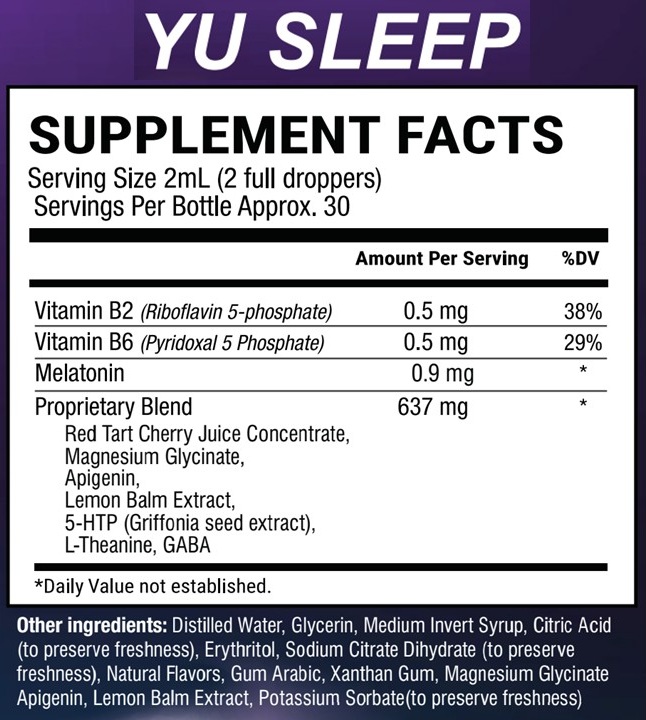
Different listings describe different ingredient lists, and the counts vary from seven to ten. The ingredients that appear most often across these pages are red tart cherry extract, 5-HTP, L-theanine, GABA, melatonin, and several B vitamins. Some listings also mention minerals and botanical extracts.
This inconsistency matters, and it is the first thing a careful buyer should resolve. The supplement facts panel on the physical bottle, or the label shown on the official site, is the authoritative list. Check whether melatonin is included and at what dose, because that single ingredient changes the product’s safety profile more than any other. Also check the serving size, the number of servings per bottle, and whether the product lists any allergens or inactive ingredients.
It is also worth understanding what each commonly cited ingredient is supposed to do.
- Melatonin is a hormone that helps signal the body’s sleep-wake timing. Supplemental melatonin has shown modest effects on how quickly people fall asleep, with the strongest evidence in jet lag and certain circadian problems.
- Tart cherry extract contains compounds that have been studied for their possible role in sleep timing. Study results have been small and mixed.
- L-theanine, an amino acid found in tea, has been studied for relaxation. Evidence exists, but the studies are generally small.
- GABA is a neurotransmitter. Whether a supplemental form reaches the brain in meaningful amounts is debated among researchers.
- 5-HTP is a precursor to serotonin. It has limited evidence for sleep, and it can interact with several medications, discussed below.
- B vitamins support normal energy metabolism, but taking them does not produce a sleep effect unless a deficiency is present.
Notice the pattern. Each ingredient has some research behind it, but most results are modest, and studies of single ingredients do not automatically predict how a combined product will perform. That is why a real test of YU Sleep has to be done on you, not on a page of ingredient descriptions.
How the formula is meant to work
According to the product’s marketing, the blend works on several fronts at once. Some ingredients are said to help the body wind down, others to support the body’s internal clock, and others to ease the stress that keeps people awake. The idea of supporting sleep from multiple angles is reasonable in principle, since sleep depends on many systems. It is also a claim that is hard to test, because a combined product can have effects that no single ingredient explains.
A useful way to think about it is this. Sleep is shaped by timing, by how relaxed your nervous system is at bedtime, and by how much your body is struggling with stress or discomfort during the night. A supplement can, at best, nudge some of these factors. It cannot fix a sleep environment that is too bright or too warm, a schedule that shifts every day, or a condition such as sleep apnea that requires medical treatment.
What the evidence does and does not show
Here is the honest summary. Individual ingredients in YU Sleep have been studied, and most of those studies are small, short, or both. The results are generally positive but modest, with effects that are often a few minutes faster to fall asleep or a small change in how refreshed people feel. Those effects can matter to someone who has been awake for an hour, but they are not the dramatic transformation some advertising suggests.
What the public record does not contain, at least in material we could verify, is an independent clinical trial of the finished YU Sleep formula. The testimonials quoted across promotional pages cannot be verified, and the sources quoting them do not provide names, dates, or methods. That does not mean the product is ineffective. It means that no one outside the company has shown that it works as a combined product, and you should weigh the claims accordingly.
The absence of proof is a reason to test carefully, not a reason to dismiss the product. If you choose to try it, your own records will tell you more than any review page.
Pricing and the 60-day guarantee
Prices quoted in online listings differ from one page to another, which is a common sign that promotional pricing changes frequently. Reported figures include about $69 for a single bottle, and multi-bottle packages at lower per-bottle prices, with some listings noting free shipping on larger orders. Some pages also show higher “regular” prices with a discount applied. Before buying, check the current price on the official site and compare the total cost of the package you actually need.
The product is widely described as carrying a 60-day money-back guarantee. Because the terms of any refund policy determine what you can actually get back, read the official terms before you order. Look for the refund window, whether it starts from the delivery date or the purchase date, whether shipping costs are refunded, whether you must return unused bottles, and how to request a refund. A guarantee is only useful if you can use it without a struggle.
Plan the trial so that it fits the guarantee window. If you start on day one and the refund period runs from delivery, make sure you have the full 60 days available, including the time spent waiting for the package to arrive.
Safety: who should check with a doctor first
Dietary supplements are not the same as prescription medicines, but they can still affect your body, and some combinations are risky. Sleep supplements in particular deserve care for several reasons.
First, 5-HTP can interact with antidepressants, especially SSRIs and SNRIs, and with other medicines that affect serotonin. Combining them can cause a serious condition called serotonin syndrome. If you take any antidepressant, do not add 5-HTP without asking your doctor or pharmacist.
Second, melatonin and other sleep-promoting ingredients can add to the effects of sedatives, sleeping pills, alcohol, and some antihistamines. Taking them together can cause excessive drowsiness, and in some cases, impaired driving or falls.
Third, supplements are not recommended without medical advice for pregnant or breastfeeding women, for children, and for people with autoimmune conditions, liver or kidney disease, or seizure disorders. Adults with depression or anxiety should talk to their clinician before adding any sleep product, because poor sleep is often a symptom that needs direct treatment.
Fourth, persistent insomnia, loud snoring with gasping, morning headaches, or daytime sleepiness that interferes with work or driving are warning signs. These can indicate sleep apnea or another condition. A supplement is not a substitute for a medical evaluation in those cases.
If you have any concern, speak with a doctor or pharmacist before you start. Bring the bottle or a photo of the label so they can check the actual ingredients.
How to run your own 60-day test
The most useful thing you can do is measure your sleep before you start, so you have a baseline to compare against. You do not need a sleep lab. A notebook, a phone note, or a basic sleep-tracking app will do.
Each morning, record a few simple facts about the night before. Estimate how long it took you to fall asleep. Note how many times you woke up and whether you got back to sleep easily. Rate how rested you feel on a scale of one to five. Then note anything that might have affected the night, such as alcohol, late meals, a stressful day, or travel.
Keep your other habits as steady as you can for the first two weeks. If you change your exercise routine, caffeine intake, or bedtime during the trial, you will not know whether the supplement or the change made the difference. Try to take the product at the same time each evening, as directed on the label, and do not increase the dose to speed up results.
Think in phases rather than days. Early nights can be noisy, and it often takes a few weeks for any gradual effect to become visible. Compare averages over each block of days rather than reacting to a single bad night.
Finally, decide in advance what counts as success. For example, you might decide that the product is worth continuing if you fall asleep about fifteen minutes faster on average and wake up fewer times, with a noticeable improvement in morning energy. Writing that goal down before you start prevents you from rationalising a result afterwards.
60-day experience tracking matrix
Use the table below to record your results. Fill in one row per period. Averages are more useful than single nights, so calculate them from your daily notes at the end of each block.
| Period | Avg. time to fall asleep (minutes) | Avg. night wake-ups | Avg. morning energy (1 to 5) | Daytime focus and drowsiness | Side effects or notes |
|---|---|---|---|---|---|
| Before starting (7 nights) | |||||
| Days 1 to 7 | |||||
| Days 8 to 14 | |||||
| Days 15 to 30 | |||||
| Days 31 to 45 | |||||
| Days 46 to 60 | |||||
| Overall change |
When you finish, compare the baseline row with the final block. A change of a few minutes or one fewer wake-up per night is a meaningful gain for many people, and it is worth recording precisely. If nothing changed, or if you noticed side effects such as headaches, stomach upset, vivid dreams, or morning grogginess, stop taking the product and speak with your doctor.
Key highlights
- YU Sleep is a liquid supplement marketed for falling asleep faster, staying asleep, and waking refreshed.
- Ingredient lists differ between sources, so check the label on the bottle or the official site.
- Individual ingredients have modest, mixed evidence, and no independent trial of the finished formula was found in the sources reviewed.
- Prices reported online vary, and the official refund terms should be read before ordering.
- 5-HTP and melatonin can interact with medicines, so anyone on prescription drugs should check first.
- A structured 60-day test, with a baseline and averaged results, is the fairest way to judge whether it helps you.
Frequently asked questions
Will YU Sleep make me sleep through the night? Nothing can guarantee that. The most realistic goal is a measurable improvement, such as falling asleep somewhat faster or waking less often, that you can confirm with your own records.
Is YU Sleep habit-forming? Listings say it is non-habit forming. Ingredients like melatonin are not considered addictive, but any product can be used too heavily, so follow the label directions.
Can I take it with other medicines? Not without checking. Ask a doctor or pharmacist, especially if you take antidepressants, sedatives, blood thinners, or medicines for blood pressure or diabetes.
How long should I wait before judging it? Give it at least four weeks of consistent use, and ideally the full 60 days, while keeping other habits steady.
What if it doesn’t work for me? Use the refund terms on the official site, and consider other steps that often help more over time: a consistent wake time, reduced evening screen use, limiting caffeine after midday, a cool and dark bedroom, and a conversation with your doctor if sleep problems persist.
Final verdict
YU Sleep is a sleep supplement with a plausible-sounding ingredient list and a promotional presence that is far larger than its independent evidence. That combination calls for a measured approach rather than enthusiasm or dismissal. The ingredients have some research behind them, the price is not trivial, and the refund policy is only worth something if you read the terms and use the full window.
If you are generally healthy, take no interacting medicines, and want to try a supplement alongside good sleep habits, a 60-day trial with careful tracking is a reasonable way to find out whether it helps you. If you take prescription medicines, are pregnant, or have ongoing sleep problems, start with a conversation with your doctor. And if you find that your nights do not improve after the trial, that result is useful information too. It tells you to look more closely at your routine, your environment, and your health, rather than to keep buying more of the same product.
Better sleep usually comes from several small things working together. A supplement may be one of them, but it should be judged by the nights it actually produces, not by the promises that surround it.